HB 1674
Kerwin’s bill capping 17 PFAS in sewage sludge fertilizer
Died in committee
Verdict: No flags

Initial review · graded Oct 20, 2026 · Headline, summary and grade are analysis of the bill text, not a finding about any person · How we grade
Caption
relating to the production, sale, and use of certain agricultural products containing perfluoroalkyl and polyfluoroalkyl substances (PFAS); creating a criminal offense.
Caption from analyzed text · version I.
Summary
Above the limits, no making, selling or applying it.
The bill sets limits on 17 kinds of PFAS "forever chemicals" in fertilizer and soil products made from sewage sludge, and bans making, selling, or applying those products above the limits. It covers manufacturers of sludge-based fertilizers, compost, and biosolids, plus anyone who sells or spreads them, and requires monthly lab samples to the state service, batch-by-batch self-testing, and public posting of test results. Failing batches must be destroyed as hazardous waste or burned, repeat failures trigger a stop-sale order and permit suspension, and knowingly selling or applying an over-limit product becomes a Class A misdemeanor offense, or a state jail felony offense on a repeat conviction, starting September 1, 2025.
Labels
Labels: CREATES AN OFFENSE. The caption of the graded version (introduced) reads: “relating to the production, sale, and use of certain agricultural products containing perfluoroalkyl and polyfluoroalkyl substances (PFAS); creating a criminal offense.”PENDING FOREVER. Heard by the House Environmental Regulation committee on May 9, 2025 and left pending. Never voted out. The bill died.
Receipt
The receipt
89R-HB1674 · 2024-12-19
SOLD BY


+ 2 more authors, 71 coauthors
ITEM
relating to the production, sale, and use of certain agricultural products containing perfluoroalkyl and polyfluoroalkyl substances (PFAS); creating a criminal offense.
WHAT IT DOES
Above the limits, no making, selling or applying it.
The bill sets limits on 17 kinds of PFAS "forever chemicals" in fertilizer and soil products made from sewage sludge, and bans making, selling, or applying those products above the limits. It covers manufacturers of sludge-based fertilizers, compost, and biosolids, plus anyone who sells or spreads them, and requires monthly lab samples to the state service, batch-by-batch self-testing, and public posting of test results. Failing batches must be destroyed as hazardous waste or burned, repeat failures trigger a stop-sale order and permit suspension, and knowingly selling or applying an over-limit product becomes a Class A misdemeanor offense, or a state jail felony offense on a repeat conviction, starting September 1, 2025.
CHARGES
[ ] NONE FOUND
TOTAL
No first-year general revenue figure available here.
LBB estimate · fiscal note version I · source
Sources
Fiscal note · version I · May 8, 2025
The fiscal implications of the bill cannot be determined due to a lack of data to estimate the number of tests of commercial fertilizers for the presence of perfluoroalkyl and polyfluoroalkyl substances.
LBB published estimates · flow over the stated periods.
Source snapshot 2026-10-19, Central time.
HISTORY
- Filed
- Read first time
- Referred to Environmental Regulation
- Scheduled for public hearing on . . .
- Considered in public hearing
- Committee substitute considered in committee
- Testimony taken/registration(s) recorded in committee
- Left pending in committee
FILED UNDER
No verified beat found.

THANK YOU FOR CHECKING THE RECEIPT
CAMPAIGN PAID FOR BY
CAMPAIGN PAID FOR BY
Donors
Not tied to this bill.
Sources
The author's campaign account only. Own money and internal transfers are separate on the member page.
Derived itemized flow · Nov 1, 2024 to Oct 20, 2026. State data as of Nov 4, 2026.
Derived itemized contributions on live regular reports and uncovered special-session dates. Internal account transfers and daily reports are excluded.
Texans for Lawsuit Reform PAC$121,392.42
Texans for Lawsuit Reform PAC
$121,392.42
- Cash
- $75,000.00
- Paid by others
- $46,392.42
- Total
- $121,392.42
Also funds 124 other sitting lawmakers.
Derived recipient stock · Jul 10, 2024 to Oct 23, 2026. State data as of Nov 4, 2026.
TEC account match.
TeamSources
Derived itemized flow · Dec 9, 2024 to Sep 12, 2026. State data as of Nov 4, 2026.
Derived itemized contributions on live regular reports and uncovered special-session dates. Internal account transfers and daily reports are excluded.
Report IDs: 100987252, 101031352, 101036067, 101040466, 101069173.
Missing data does not establish zero giving. Display amounts are rounded.
Texans for Lawsuit Reform PAC
$121,392.42
- Cash
- $75,000.00
- Paid by others
- $46,392.42
- Total
- $121,392.42
Also funds 124 other sitting lawmakers.
Derived recipient stock · Jul 10, 2024 to Oct 23, 2026. State data as of Nov 4, 2026.
TEC account match.
TeamSources
Derived itemized flow · Dec 9, 2024 to Sep 12, 2026. State data as of Nov 4, 2026.
Derived itemized contributions on live regular reports and uncovered special-session dates. Internal account transfers and daily reports are excluded.
Report IDs: 100987252, 101031352, 101036067, 101040466, 101069173.
Votes
No floor vote loaded for this bill.
Fiscal
No first-year general revenue figure available here.
LBB estimate · fiscal note version I · source
Sources
Fiscal note · version I · May 8, 2025
The fiscal implications of the bill cannot be determined due to a lack of data to estimate the number of tests of commercial fertilizers for the presence of perfluoroalkyl and polyfluoroalkyl substances.
LBB published estimates · flow over the stated periods.
Source snapshot 2026-10-19, Central time.
How this was graded
Analysis of text version I by claude-opus-5-5, Oct 20, 2026, against the published rubric.
Sources
Texas House · Filed Dec 19, 2024
05/09/2025 H Left pending in committee
Texas Legislature Online · Introduced
Data snapshot Oct 26, 2026 at 4:20 AM CDT. Grades, charges, quotes and corrections follow the published record.


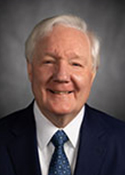



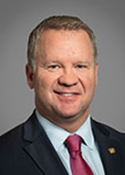
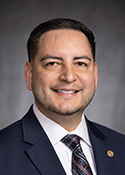

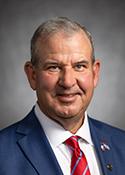



















































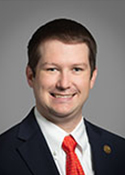





House committee · Environmental Regulation · Final status: Died in committee
Companion
SB 886 by Sparks (identical)
Subjects
Agriculture
Crimes--Miscellaneous
FERTILIZER
HAZARDOUS SUBSTANCES
SEWAGE SLUDGE
TEXAS A&M AGRILIFE EXTENSION SERVICE
Text
The text as introduced · 910 words
By: Kerwin
H.B. No. 1674

A BILL TO BE ENTITLED

AN ACT

relating to the production, sale, and use of certain agricultural

products containing perfluoroalkyl and polyfluoroalkyl substances

(PFAS); creating a criminal offense.

BE IT ENACTED BY THE LEGISLATURE OF THE STATE OF TEXAS:

SECTION 1. Section 63.001, Agriculture Code, is amended by

adding Subsections (13-a) and (15-a) to read as follows:

(13-a) "Perfluoroalkyl and polyfluoroalkyl substances"

means any member of the class of manufactured fluorinated chemicals

containing at least one fully fluorinated carbon atom.

(15-a) "Sewage sludge" means any solid, semisolid, or

liquid residue generated during treatment of sewage or septage at a

municipal, commercial, or industrial wastewater treatment

facility.

SECTION 2. Section 63.002, Agriculture Code, is amended by

amending Subsection (a) to read as follows:

Sec. 63.002. COMMERCIAL FERTILIZER. (a) Except as

otherwise provided by this section, a substance is a commercial

fertilizer subject to this chapter if it is:

(1) a fertilizer material;

(2) a mixed fertilizer;

(3) a customer-formula fertilizer; [ or ]

(4) another substance, material, or element,

including a pesticide, that is intended for use or is used as an

ingredient or component of a mixture of materials that is used,

designed or represented for use, or claimed to have value, in

promoting plant growth[ . ] ; or

(5) any biosolid, compost, wastewater residuals,

industrial or sewage septage, sewage sludge, lagoon residuals, or

other material intended for use as a fertilizer, soil amendment,

topsoil replacement, or other similar agricultural purpose that

contains or was produced from sewage sludge.

SECTION 3. Subchapter F, Chapter 63, Agriculture Code is

amended by adding Section 63.096 to read as follows:

Sec. 63.096. PROVISIONS RELATED TO PRODUCTS CONTAINING

PERFLUOROALKYL AND POLYFLUOROALKYL SUBSTANCES. (a) Except as

otherwise provided in this Chapter, a person may not manufacture,

sell, distribute, or apply any material described by Section

63.002(a)(5) with a concentration of perfluoroalkyl and

polyfluoroalkyl substances above the following levels:

(1) Perfluorobutyric acid - 28,800 parts per trillion;

(2) Perfluorobutane sulfonate - 40,300 parts per

trillion;

(3) Perfluoropentanoic acid - 14,400 parts per

trillion;

(4) Perfluorohexane sulfonate - 300 parts per

trillion;

(5) Perfluorohexanoic acid - 9,400 parts per trillion;

(6) Perfluoroheptanoic acid - 400 parts per trillion;

(7) Perfluorooctanoic sultanate - 5,100 parts per

trillion;

(8) Perfluorooctanoic acid - 900 parts per trillion;

(9) Perfluorooctane sulfonamide - 2,700 parts per

trillion;

(10) Perfluorononanoic acid - 1,500 parts per

trillion;

(11) Perfluorodecanoic acid - 800 parts per trillion;

(12) Perfluorodecane sulfonate - 800 parts per

trillion;

(13) Perfluoroundecanoic acid - 800 parts per

trillion;

(14) Perfluorododecanoic acid - 800 parts per

trillion;

(15) Perfluorotridecanoic acid - 800 parts per

trillion;

(16) Perfluorotridecanoic acid - 800 parts per

trillion;

(17) GenX Chemicals - 800 parts per trillion.

(b) Each month, a manufacturer of any material described by

Section 63.002(a)(5) shall send a sample identified as required by

Section 63.093 to the service for independent analysis for the

presence of perfluoroalkyl and polyfluoroalkyl substances. If the

service finds through chemical analysis or other method that a

sample contains a concentration of perfluoroalkyl and

polyfluoroalkyl substances above the levels in subsection (a):

(1) the service shall provide notification of its

findings as provided under Section 63.094(a); and

(2) the manufacturer shall dispose of the batch from

which the sample was taken through an appropriate hazardous waste

management unit as that term is defined in Section 361.003(14),

Health and Safety Code, or incineration.

(c) Within a single calendar year, if the service finds that

two or more samples provided by the same manufacturer under

Subsection (b) contain a concentration of perfluoroalkyl and

polyfluoroalkyl substances above the levels in subsection (a), the

service shall immediately issue a stop-sale order for all materials

described by Section 63.002(a)(5) produced by the manufacturer and

suspend the manufacturer's permit to distribute materials

described by 63.002(a)(5) until the manufacturer is able to provide

the service with a sample that is in compliance with this Section.

The service may conduct random on-site sampling at the

manufacturer's expense during the time the manufacturer's permit is

suspended as provided by the Subsection.

(d) If a manufacturer fails to send a sample as required

under Subsection (b) two or more times during a single calendar

year, the service shall take action against the manufacturer as

provided under Subsection (c).

(e) In addition to the requirements in Subsection (b), a

manufacturer of any material described by Section 63.002(a)(5)

shall self-test each batch of material prior to distribution, sale,

or application. The manufacturer must maintain records of each

test and publish the results on its public internet website. Any

test finding a concentration of perfluoroalkyl and polyfluoroalkyl

substances above the levels in subsection (a) shall be disposed of

as provided by Subsection (b)(2).

SECTION 4. Subchapter H, Chapter 63, Agriculture Code, is

amended by adding Sections 63.147 to read as follows:

Sec. 63.147. UNLAWFUL DISTRIBUTION OF PRODUCTS CONTAINING

PERFLUOROALKYL AND POLYFLUOROALKYL SUBSTANCES. (a) A person

commits an offense if the person, acting intentionally or knowingly

with respect to the person's conduct, sells, distributes, or

applies any material described by Section 63.002(a)(5) with a

concentration of perfluoroalkyl and polyfluoroalkyl substances

above the levels listed in Section 63.096(a).

(b) Except as provided in Subsection (c), a violation of

this section is a Class A Misdemeanor.

(c) If a person has previously been convicted of a violation

of this section, a subsequent violation of this section is a State

Jail Felony.

SECTION 5. This Act takes effect September 1, 2025.