HB 239
Swanson Private Spaces Bill Bars Courts From Blocking It
Died in committee
Verdict: Smells

Why it's charged
Caption mismatch
THE TEXT
…“any person, including an entity, attorney, or law firm, who seeks declaratory or injunctive relief”…
Bill text, introduced version (I)
The caption mentions only private-space rules and a civil penalty, but the body adds a fee-shifting rule that makes challengers and their attorneys liable for costs. It also adds broad immunity and limits on court jurisdiction, and the caption mentions neither.
Caption mismatchInitial review · graded Oct 20, 2026 · Headline, summary and grade are analysis of the bill text, not a finding about any person · How we grade
Caption
relating to regulations and policies for entering or using certain private spaces; authorizing a civil penalty.
Caption from analyzed text · version I.
Summary
Restrooms go one-sex. Sue to stop it and lose? You and your lawyers pay the fees.
The bill requires every state agency and local government, including school districts, charter schools, colleges, jails and contracted family violence shelters, to limit multi-person restrooms, locker rooms, showers, changing rooms and sleeping quarters in their facilities to people of one biological sex. Citizens can complain to the attorney general after giving the entity three business days to fix a violation, and the attorney general can then sue for $5,000 for a first violation and $25,000 for later ones, with each day counted separately. The bill also shields the state and local officials from lawsuits challenging the law, bars courts from blocking it, and makes anyone who sues to stop any law of this kind, including their lawyers and law firms, pay the other side's legal fees if they lose.
Labels
Labels: NEVER GOT A HEARING. Filed Nov 12, 2024 and referred to the House State Affairs committee. No public hearing. The bill died.
Receipt
The receipt
89R-HB239 · 2024-11-12
SOLD BY


+ 2 more authors, 78 coauthors
ITEM
relating to regulations and policies for entering or using certain private spaces; authorizing a civil penalty.
WHAT IT DOES
Restrooms go one-sex. Sue to stop it and lose? You and your lawyers pay the fees.
The bill requires every state agency and local government, including school districts, charter schools, colleges, jails and contracted family violence shelters, to limit multi-person restrooms, locker rooms, showers, changing rooms and sleeping quarters in their facilities to people of one biological sex. Citizens can complain to the attorney general after giving the entity three business days to fix a violation, and the attorney general can then sue for $5,000 for a first violation and $25,000 for later ones, with each day counted separately. The bill also shields the state and local officials from lawsuits challenging the law, bars courts from blocking it, and makes anyone who sues to stop any law of this kind, including their lawyers and law firms, pay the other side's legal fees if they lose.
CHARGES
[x] CAPTION MISMATCHanalysis confidence 45%
THE TEXT
…“any person, including an entity, attorney, or law firm, who seeks declaratory or injunctive relief”…
Bill text, introduced version (I)
The caption mentions only private-space rules and a civil penalty, but the body adds a fee-shifting rule that makes challengers and their attorneys liable for costs. It also adds broad immunity and limits on court jurisdiction, and the caption mentions neither.
TOTAL
No fiscal note in the loaded record.
HISTORY
- Filed
- Read first time
- Referred to State Affairs
FILED UNDER
THE TEXT
…“is jointly and severally liable to pay the costs and reasonable attorney's fees of the prevailing party”…
Bill text, introduced version (I)
The bill makes people, lawyers and law firms who challenge any law regulating private-space access by sex pay the other side's legal fees, and it shields government from suits against the chapter.

THANK YOU FOR CHECKING THE RECEIPT
CAMPAIGN PAID FOR BY
CAMPAIGN PAID FOR BY
Donors
Not tied to this bill.
Sources
The author's campaign account only. Own money and internal transfers are separate on the member page.
Derived itemized flow · Oct 27, 2024 to Oct 23, 2026. State data as of Nov 4, 2026.
Derived itemized contributions on live regular reports and uncovered special-session dates. Internal account transfers and daily reports are excluded.
Texans for Lawsuit Reform PAC$314,216.50
Texans for Lawsuit Reform PAC
$314,216.50
- Cash
- $35,000.00
- Paid by others
- $279,216.50
- Total
- $314,216.50
Also funds 124 other sitting lawmakers.
Derived recipient stock · Jul 10, 2024 to Oct 23, 2026. State data as of Nov 4, 2026.
TEC account match.
TeamSources
Derived itemized flow · Jun 27, 2025 to Oct 23, 2026. State data as of Nov 4, 2026.
Derived itemized contributions on live regular reports and uncovered special-session dates. Internal account transfers and daily reports are excluded.
Report IDs: 101029008, 101031437, 101068777, 101071636.
Texas Conservative Majority PAC$116,200.00
Texas Conservative Majority PAC
$116,200.00
- Cash
- $25,000.00
- Paid by others
- $91,200.00
- Total
- $116,200.00
Also funds 42 other sitting lawmakers.
Derived recipient stock · Jan 23, 2026 to Oct 23, 2026. State data as of Nov 4, 2026.
TEC account match.
TeamSources
Derived itemized flow · Sep 18, 2026 to Oct 23, 2026. State data as of Nov 4, 2026.
Derived itemized contributions on live regular reports and uncovered special-session dates. Internal account transfers and daily reports are excluded.
Report IDs: 101068777, 101071636.
Missing data does not establish zero giving. Display amounts are rounded.
Texans for Lawsuit Reform PAC
$314,216.50
- Cash
- $35,000.00
- Paid by others
- $279,216.50
- Total
- $314,216.50
Also funds 124 other sitting lawmakers.
Derived recipient stock · Jul 10, 2024 to Oct 23, 2026. State data as of Nov 4, 2026.
TEC account match.
TeamSources
Derived itemized flow · Jun 27, 2025 to Oct 23, 2026. State data as of Nov 4, 2026.
Derived itemized contributions on live regular reports and uncovered special-session dates. Internal account transfers and daily reports are excluded.
Report IDs: 101029008, 101031437, 101068777, 101071636.
Texas Conservative Majority PAC
$116,200.00
- Cash
- $25,000.00
- Paid by others
- $91,200.00
- Total
- $116,200.00
Also funds 42 other sitting lawmakers.
Derived recipient stock · Jan 23, 2026 to Oct 23, 2026. State data as of Nov 4, 2026.
TEC account match.
TeamSources
Derived itemized flow · Sep 18, 2026 to Oct 23, 2026. State data as of Nov 4, 2026.
Derived itemized contributions on live regular reports and uncovered special-session dates. Internal account transfers and daily reports are excluded.
Report IDs: 101068777, 101071636.
Votes
No floor vote loaded for this bill.
Fiscal
No fiscal note in the loaded record.
How this was graded
Analysis of text version I by claude-opus-5-5, Oct 20, 2026, against the published rubric.
Sources
Texas House · Filed Nov 12, 2024
02/27/2025 H Referred to State Affairs: Feb 27 2025 11:13AM
Texas Legislature Online · Introduced
Data snapshot Oct 26, 2026 at 4:19 AM CDT. Grades, charges, quotes and corrections follow the published record.









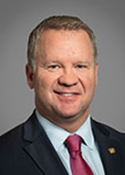
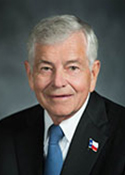
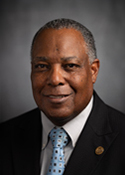
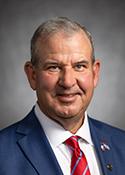
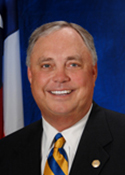












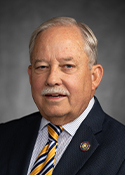








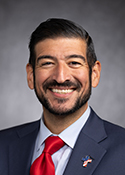





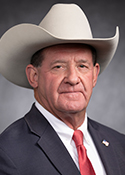


































House committee · State Affairs · Final status: Died in committee
Companion
SB 240 by Middleton (identical)
HB 2062 by Holt (duplicate)
Subjects
Civil Remedies & Liabilities
Corrections--Jails & Prisons
Courts--General
Education--Higher--General
Family--Family Violence
Political Subdivisions
State Agencies, Boards & Commissions
Women
TEXAS WOMEN'S PRIVACY ACT (PH8L1)
ATTORNEY'S FEES
BIRTH & DEATH CERTIFICATES
ATTORNEY GENERAL
Text
The text as introduced · 2,178 words
By: Swanson
H.B. No. 239

A BILL TO BE ENTITLED

AN ACT

relating to regulations and policies for entering or using certain

private spaces; authorizing a civil penalty.

BE IT ENACTED BY THE LEGISLATURE OF THE STATE OF TEXAS:

SECTION 1. This Act may be cited as the Texas Women's

Privacy Act.

SECTION 2. Subtitle Z, Government Code, is amended by

adding Chapter 3001 to read as follows:

CHAPTER 3001. GOVERNMENTAL ACTION AFFECTING CERTAIN PRIVATE

SPACES.

Sec. 3001.001. DEFINITIONS. In this chapter:

(1) "Biological sex" means the physical condition of

being male or female, as determined by:

(A) the sex organs, chromosomes, and endogenous

profiles of a person; and

(B) a person's original birth certificate, if the

biological sex is correctly stated on the birth certificate, as

indicated by the biological sex being:

(1) entered at or near the time of birth; or

(2) modified only to correct a scrivener or

clerical error in the biological sex.

(2) "Correctional facility" has the meaning assigned

by Section 1.07, Penal Code.

(3) "Family violence shelter" means a family violence

shelter center or a family violence nonresidential center, as

defined by Section 51.002, Human Resources Code, partaking in a

contract as established by Section 51.003, Human Resources Code.

(4) "Political subdivision" means a governmental

entity of this state that is not a state agency and includes a

county, municipality, special purpose district or authority,

school district, open-enrollment charter school, and junior

college district.

(5) "Private space" means a facility designed or

designated for use by more than one person at a time, where a person

may be in a state of undress in the presence of another person,

regardless of whether the facility provides curtains or partial

walls for privacy. The term includes a restroom, locker room,

changing room, shower room, family violence shelter, correctional

facility, and sleeping quarter.

(6) "Single-occupancy private space" means a facility

designed or designated for use by only one person at a time, where a

person may be in a state of undress, including a single toilet

restroom with a locking door that is designed or designated as

unisex or for use based on biological sex or a sleeping quarter that

accommodates a single occupant.

(7) "State agency" means a department, commission,

board, office, council, authority, or other agency in the

executive, legislative, or judicial branch of state government that

is created by the constitution or a statute of this state, including

an institution of higher education as defined by Section 61.003,

Education Code.

Sec. 3001.002. SAFETY AND PRIVACY IN PRIVATE SPACES. (a) A

political subdivision or state agency shall require each private

space located within a facility owned, operated, or controlled by

the political subdivision or state agency be designated for and

used only by persons based on the person's biological sex.

(b) Nothing in this section shall be construed to prohibit a

political subdivision or state agency from:

(1) adopting policies necessary to accommodate

persons protected under the Americans with Disabilities Act, young

children in need of assistance, or elderly persons requiring aid;

(2) establishing single-occupancy private spaces or

family restrooms, changing rooms, or sleeping quarters; or

(3) redesignating a private space designated for

exclusive use by one sex to a designation for exclusive use by the

opposite sex.

Sec. 3001.003. ACCOMMODATIONS AUTHORIZED. This chapter

does not prohibit a political subdivision or state agency from

providing an accommodation, including a single-occupancy private

space, on request due to special circumstances. The political

subdivision or state agency may not provide an accommodation that

allows a person to use a private space designated for the biological

sex opposite to the person's biological sex.

Sec. 3001.004. EXCEPTIONS. A designation of a private

space under Section 3001.002 does not apply to:

(1) a person entering a private space designated for

the biological sex opposite to the person's biological sex:

(A) for a custodial purpose;

(B) for a maintenance or inspection purpose;

(C) to render medical or other emergency

assistance;

(D) to accompany a person needing assistance in

using the facility;

(E) to receive assistance in using the facility;

or

(2) a child who is:

(A) younger than 10 years of age entering a

private space designated for the biological sex opposite to the

child's biological sex; and

(B) accompanying a person caring for the child.

Sec. 3001.005. CIVIL PENALTY. (a) A political subdivision

or state agency that violates this chapter is liable for a civil

penalty of:

(1) $5,000 for the first violation; and

(2) $25,000 for the second or a subsequent violation.

(b) Each day of a continuing violation of this chapter

constitutes a separate violation.

Sec. 3001.006. COMPLAINT; NOTICE. (a) A citizen of this

state may file a complaint with the attorney general that a

political subdivision or state agency is in violation of this

chapter only if:

(1) the citizen provides the political subdivision or

state agency a written notice that describes the violation; and

(2) the political subdivision or state agency does not

cure the violation before the end of the third business day after

the date of receiving the written notice.

(b) A complaint filed under this section must include:

(1) a copy of the written notice; and

(2) the citizen's sworn statement or affidavit

describing the violation and indicating that the citizen provided

the notice required by this section.

Sec. 3001.007. DUTIES OF ATTORNEY GENERAL: INVESTIGATION

AND NOTICE. (a) Before bringing a suit against a political

subdivision or state agency for a violation of this chapter, the

attorney general shall investigate a complaint filed under Section

3001.006 to determine whether legal action is warranted.

(b) The political subdivision or state agency that is the

subject of the complaint shall provide to the attorney general any

information the attorney general requests in connection with the

complaint, including:

(1) supporting documents related to the complaint; and

(2) a statement regarding whether the entity has

complied or intends to comply with this chapter.

(c) If the attorney general determines that legal action is

warranted, the attorney general shall provide the appropriate

officer of the political subdivision or state agency charged with

the violation a written notice that:

(1) describes the violation and location of the

private space found to be in violation;

(2) states the amount of the proposed penalty for the

violation; and

(3) requires the political subdivision or state agency

to cure the violation on or before the 15th day after the date the

notice is received to avoid the penalty, unless the political

subdivision or state agency was found liable by a court for

previously violating this chapter.

Sec. 3001.008. COLLECTION OF CIVIL PENALTY; MANDAMUS. (a)

If, after receipt of notice under Section 3001.007(c), the

political subdivision or state agency has not cured the violation

on or before the 15th day after the date the notice is provided

under Section 3001.007(c)(3), the attorney general may sue to

collect the civil penalty provided by Section 3001.005.

(b) In addition to filing suit under Subsection (a), the

attorney general may also file a petition for a writ of mandamus or

apply for other appropriate equitable relief.

(c) A suit or petition under this section may be filed in a

district court in:

(1) Travis County; or

(2) a county in which the principal office of the

political subdivision or state agency is located.

(d) The attorney general shall recover reasonable expenses

incurred in obtaining relief under this section, including court

costs, reasonable attorney's fees, investigative costs, witness

fees, and deposition costs.

(e) A civil penalty collected by the attorney general under

this section shall be deposited to the credit of the compensation to

victims of crime fund established under Subchapter B, Chapter 56,

Code of Criminal Procedure.

(f) A person may bring a civil action for declaratory

relief, injunctive relief, and reasonable attorney's fees and costs

against a political subdivision or state agency that violates this

chapter.

Sec. 3001.009. IMMUNITY FROM SUIT AND LIMITS ON

JURISDICTION. (a) Notwithstanding any other law, the state and

each of its officers and employees shall have sovereign immunity,

its political subdivisions and each of their officers and employees

shall have governmental immunity, and each officer and employee of

this state and its political subdivisions shall have official

immunity in any action, claim, counterclaim, or any type of legal or

equitable action that challenges the validity of any provision or

application of this chapter, on constitutional grounds or

otherwise, or that seeks to prevent or enjoin the state or its

political subdivisions or any officer, employee, or agent of this

state or a political subdivision from enforcing any provision or

application of this chapter, or from hearing, adjudicating, or

docketing a suit or petition brought under Section 3001.008, unless

that immunity has been abrogated or preempted by federal law in a

manner consistent with the Constitution of the United States.

(b) Notwithstanding any other law, the immunities conferred

by Subsection (a) shall apply in every court, both state and

federal, and in every adjudicative proceeding of any type

whatsoever.

(c) Notwithstanding any other law, no provision of state law

may be construed to waive or abrogate an immunity described in

Subsection (a) unless it expressly waives or abrogates immunity

with specific reference to this section.

(d) Notwithstanding any other law, no attorney representing

the state or a political subdivision or any officer, employee, or

agent of this state or a political subdivision is authorized or

permitted to waive an immunity described in Subsection (a) or take

any action that would result in a waiver of that immunity, and any

such action or purported waiver shall be regarded as a legal nullity

and an ultra vires act.

(e) Notwithstanding any other law, including Chapter 37,

Civil Practice and Remedies Code, and sections 22.002, 22.221, and

24.007 through 24.011, Government Code, no court of this state may

award declaratory or injunctive relief, or any type of stay or writ,

including a writ of prohibition, that would pronounce any provision

or application of this subchapter invalid or unconstitutional, or

that would restrain the state or its political subdivisions, or any

officer, employee, or agent of this state or a political

subdivision, or any person from enforcing any provision or

application of this chapter, or from hearing, adjudicating,

docketing, or filing a suit or petition brought under Section

3001.008, and no court of this state shall have jurisdiction to

consider any action, claim, or counterclaim that seeks such relief.

(f) Notwithstanding any other law, including Chapter 26,

Civil Practice and Remedies Code, and Rule 42, Texas Rules of Civil

Procedure, no court of this state may certify a plaintiff or

defendant class in any action seeking the relief described in

Subsection (e).

(g) Nothing in this section or chapter shall be construed to

prevent a litigant from asserting the invalidity or

unconstitutionality of any provision or application of this chapter

as a defense to any action, claim, or counterclaim brought against

that litigant.

Sec. 3001.0010. SOVEREIGN IMMUNITY WAIVED.

Notwithstanding Section 3001.009, sovereign immunity to suit and

governmental immunity are waived and abolished to the extent of

liability created by this chapter.

SECTION 3. Chapter 30, Civil Practice and Remedies Code, is

amended by adding Section 30.023 to read as follows:

Sec. 30.023. AWARD OF ATTORNEY'S FEES IN ACTIONS

CHALLENGING CERTAIN PRIVACY LAWS. (a) Notwithstanding any other

law, any person, including an entity, attorney, or law firm, who

seeks declaratory or injunctive relief to prevent this state, a

political subdivision, any governmental entity or public official

in this state, or any person in this state from enforcing any

statute, ordinance, rule, regulation, or any other type of law that

regulates access to a private space based on biological sex in any

state or federal court, or that represents any litigant seeking

such relief in any state or federal court, is jointly and severally

liable to pay the costs and reasonable attorney's fees of the

prevailing party, including the costs and reasonable attorney's

fees that the prevailing party incurs in its efforts to recover

costs and fees.

(b) For purposes of this section, a party is considered a

prevailing party if a state or federal court:

(1) dismisses any claim or cause of action brought

against the party that seeks the declaratory or injunctive relief

described by Subsection (a), regardless of the reason for the

dismissal; or

(2) enters judgment in the party's favor on any such

claim or cause of action.

(c) A prevailing party may recover costs and attorney's fees

under this section only to the extent that those costs and

attorney's fees were incurred while defending claims or causes of

action on which the party prevailed.

SECTION 4. If any subsection or portion of this act is

declared invalid, that declaration shall not affect the validity of

the remaining portions of the act.

SECTION 5. This Act takes effect immediately if it receives

a vote of two-thirds of all the members elected to each house, as

provided by Section 39, Article III, Texas Constitution. If this

Act does not receive the vote necessary for immediate effect, this

Act takes effect September 1, 2025.