HB 3105
bill setting a $19 floor for Medicaid personal attendants
Died in committee
Verdict: No flags

Initial review · graded Oct 20, 2026 · Headline, summary and grade are analysis of the bill text, not a finding about any person · How we grade
Caption
relating to establishing a minimum base wage for certain personal attendants under Medicaid and other programs administered by the Health and Human Services Commission.
Caption from analyzed text · version I.
Summary
$19 an hour, or the federal minimum if that is higher.
The bill sets a pay floor of $19 an hour, or the federal minimum wage if that is higher, for personal attendants who give nonmedical daily-living care under Medicaid and certain other Health and Human Services Commission programs. It covers employees and subcontractors who help people bathe, dress, eat, move around, keep house and manage medications. Starting with the 2026 calendar year, those attendants must be paid at least that rate, though the state may delay any part that needs federal approval until that approval is granted.
Labels
Labels: NEVER GOT A HEARING. Filed Feb 20, 2025 and referred to the House Human Services committee. No public hearing. The bill died.
Receipt
The receipt
89R-HB3105 · 2025-02-20
SOLD BY
+ 4 coauthors
ITEM
relating to establishing a minimum base wage for certain personal attendants under Medicaid and other programs administered by the Health and Human Services Commission.
WHAT IT DOES
$19 an hour, or the federal minimum if that is higher.
The bill sets a pay floor of $19 an hour, or the federal minimum wage if that is higher, for personal attendants who give nonmedical daily-living care under Medicaid and certain other Health and Human Services Commission programs. It covers employees and subcontractors who help people bathe, dress, eat, move around, keep house and manage medications. Starting with the 2026 calendar year, those attendants must be paid at least that rate, though the state may delay any part that needs federal approval until that approval is granted.
CHARGES
[ ] NONE FOUND
TOTAL
No fiscal note in the loaded record.
HISTORY
- Filed
- Read first time
- Referred to Human Services
FILED UNDER
No verified beat found.

THANK YOU FOR CHECKING THE RECEIPT
CAMPAIGN PAID FOR BY
CAMPAIGN PAID FOR BY
Donors
Not tied to this bill.
Sources
The author's campaign account only. Own money and internal transfers are separate on the member page.
Derived itemized flow · Oct 28, 2024 to Oct 24, 2026. State data as of Nov 4, 2026.
Derived itemized contributions on live regular reports and uncovered special-session dates. Internal account transfers and daily reports are excluded.
Missing data does not establish zero giving. Display amounts are rounded.
Votes
No floor vote loaded for this bill.
Fiscal
No fiscal note in the loaded record.
How this was graded
Analysis of text version I by claude-opus-5-5, Oct 20, 2026, against the published rubric.
Sources
Texas House · Filed Feb 20, 2025
03/20/2025 H Referred to Human Services: Mar 20 2025 11:50AM
Texas Legislature Online · Introduced
Data snapshot Oct 26, 2026 at 4:20 AM CDT. Grades, charges, quotes and corrections follow the published record.
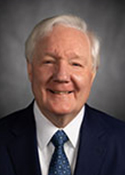
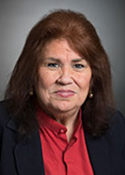


House committee · Human Services · Final status: Died in committee
Subjects
Human Services--Medical Assistance
Labor--Wages
MEDICAID
MINIMUM WAGE
HEALTH & HUMAN SERVICES COMMISSION
Text
The text as introduced · 460 words
By: Goodwin
H.B. No. 3105

A BILL TO BE ENTITLED

AN ACT

relating to establishing a minimum base wage for certain personal

attendants under Medicaid and other programs administered by the

Health and Human Services Commission.

BE IT ENACTED BY THE LEGISLATURE OF THE STATE OF TEXAS:

SECTION 1. Chapter 546, Government Code, as effective April

1, 2025, is amended by adding Subchapter P to read as follows:

SUBCHAPTER P. PERSONAL ATTENDANT SERVICES

Sec. 546.0751. DEFINITIONS. In this subchapter:

(1) "Attendant care services" means nonmedical

services that enable an individual to engage in the activities of

daily living or to perform the physical functions required for

independent living, including:

(A) bathing, dressing, grooming, feeding,

exercising, toileting, positioning, routine hair and skin care, and

other personal care services;

(B) transfer or ambulation, transportation, and

other mobility support services;

(C) light housekeeping, grocery shopping, meal

preparation, laundry, and other household assistance;

(D) assisting with self-administered

medications;

(E) monitoring health-related needs and other

health management needs; and

(F) in-home respite services.

(2) "Personal attendant" means an individual who is

engaged as an employee or subcontractor to directly provide

attendant care services to an individual eligible to receive those

services under a program administered by the commission.

Sec. 546.0752. MINIMUM BASE WAGE FOR PERSONAL ATTENDANTS.

(a) This section applies only with respect to the following

programs administered by the commission:

(1) Medicaid, including a waiver or other program

established under:

(A) Section 1115 of the Social Security Act (42

U.S.C. Section 1315);

(B) Section 1915(b), (c), or (k) of the Social

Security Act (42 U.S.C. Section 1396n(b), (c), or (k)); or

(C) Section 1929 of the Social Security Act (42

U.S.C. Section 1396t); and

(2) a program authorized under Subtitle A, Title XX,

of the Social Security Act (42 U.S.C. Section 1397 et seq.).

(b) Notwithstanding Section 62.051 or 62.151, Labor Code,

or any other law, a personal attendant providing attendant care

services under a program to which this section applies must be paid

a base wage that is not less than the greater of:

(1) $19 an hour; or

(2) the federal minimum wage under Section 6, Fair

Labor Standards Act of 1938 (29 U.S.C. Section 206).

Sec. 546.0753. RULES. The executive commissioner shall

adopt rules necessary to implement this subchapter.

SECTION 2. Section 546.0752, Government Code, as added by

this Act, applies beginning with the 2026 calendar year.

SECTION 3. If before implementing any provision of this Act

a state agency determines that a waiver or authorization from a

federal agency is necessary for implementation of that provision,

the agency affected by the provision shall request the waiver or

authorization and may delay implementing that provision until the

waiver or authorization is granted.

SECTION 4. This Act takes effect September 1, 2025.