SB 2397
Perry Disability Bill Builds A Task Force, Changes No Services
Died in committee
Verdict: Smells

Both charges, and why
Study, task force, commission, report
The bill's only output is a plan and reports, with a preliminary report due September 1, 2026 and a final report due September 1, 2028. Any change to disability services waits for later legislation.
Study, task force, commission, reportNew fee, fund, board or appointees
The bill creates a new state body with at least 17 voting members appointed by the governor, at least one nonvoting appointee, additional nonvoting members, and subcommittees. The caption does not promise less government, so the pattern fires at ordinary strength.
New fee, fund, board or appointeesInitial review · graded Oct 21, 2026 · Headline, summary and grade are analysis of the bill text, not a finding about any person · How we grade
Caption
relating to the establishment of the task force on disability policy.
Caption from analyzed text · version I.
Summary
At least 17 governor picks, a 10-year plan, a final report September 1, 2028. Abolished that day!
The bill creates a task force on disability policy with at least 17 voting members appointed by the governor, drawn from lawmakers, health care professionals, advocates, university representatives, policy experts and people with lived experience of disability. The task force must meet each quarter, hold public meetings, run subcommittees, and write a 10-year plan with a preliminary report due September 1, 2026 and a final report due September 1, 2028. Nothing about disability services, benefits or rules changes on the ground; the task force only studies and recommends, and it is abolished September 1, 2028.
Labels
Labels: NEVER GOT A HEARING. Filed Mar 12, 2025 and referred to the Senate Health & Human Services committee. No public hearing. The bill died.
Receipt
The receipt
89R-SB2397 · 2025-03-12
SOLD BY
+ 2 coauthors
ITEM
relating to the establishment of the task force on disability policy.
WHAT IT DOES
At least 17 governor picks, a 10-year plan, a final report September 1, 2028. Abolished that day!
The bill creates a task force on disability policy with at least 17 voting members appointed by the governor, drawn from lawmakers, health care professionals, advocates, university representatives, policy experts and people with lived experience of disability. The task force must meet each quarter, hold public meetings, run subcommittees, and write a 10-year plan with a preliminary report due September 1, 2026 and a final report due September 1, 2028. Nothing about disability services, benefits or rules changes on the ground; the task force only studies and recommends, and it is abolished September 1, 2028.
CHARGES
[x] STUDY, TASK FORCE, COMMISSION, REPORTanalysis confidence 90%
The bill's only output is a plan and reports, with a preliminary report due September 1, 2026 and a final report due September 1, 2028. Any change to disability services waits for later legislation.
[x] NEW FEE, FUND, BOARD OR APPOINTEESanalysis confidence 80%
The bill creates a new state body with at least 17 voting members appointed by the governor, at least one nonvoting appointee, additional nonvoting members, and subcommittees. The caption does not promise less government, so the pattern fires at ordinary strength.
TOTAL
No fiscal note in the loaded record.
HISTORY
- Received by the Secretary of the Senate
- Filed
- Read first time
- Referred to Health & Human Services
- Co-author authorized
- Co-author authorized
FILED UNDER
GOVERNMENT GROWTH UNDER A CONSERVATIVE BANNER
The bill creates a new state body in the Government Code with at least 17 governor-appointed voting members, nonvoting appointees and subcommittees that may accept gifts, grants and donations.

THANK YOU FOR CHECKING THE RECEIPT
CAMPAIGN PAID FOR BY
CAMPAIGN PAID FOR BY
Donors
Not tied to this bill.
Sources
The author's campaign account only. Own money and internal transfers are separate on the member page.
Derived itemized flow · Jul 1, 2024 to Oct 23, 2026. State data as of Nov 4, 2026.
Derived itemized contributions on live regular reports and uncovered special-session dates. Internal account transfers and daily reports are excluded.
Texans for Lawsuit Reform PAC$60,000.00
Texans for Lawsuit Reform PAC
$60,000.00
- Cash
- $60,000.00
- Paid by others
- $0.00
- Total
- $60,000.00
Also funds 124 other sitting lawmakers.
Derived recipient stock · Jul 10, 2024 to Oct 23, 2026. State data as of Nov 4, 2026.
TEC account match.
TeamSources
Derived itemized flow · Nov 13, 2024 to Oct 23, 2026. State data as of Nov 4, 2026.
Derived itemized contributions on live regular reports and uncovered special-session dates. Internal account transfers and daily reports are excluded.
Report IDs: 100983698, 101007598, 101030579, 101072377.
Ryan Texas PAC$35,000.00
Ryan Texas PAC
$35,000.00
- Cash
- $35,000.00
- Paid by others
- $0.00
- Total
- $35,000.00
Also funds 25 other sitting lawmakers.
Derived recipient stock · Sep 23, 2024 to Oct 22, 2026. State data as of Nov 4, 2026.
TEC account match.
TeamSources
Derived itemized flow · Dec 13, 2024 to Mar 12, 2026. State data as of Nov 4, 2026.
Derived itemized contributions on live regular reports and uncovered special-session dates. Internal account transfers and daily reports are excluded.
Report IDs: 100983698, 101057700.
Fort Stockton Holdings LP$25,000.00
Fort Stockton Holdings LP
$25,000.00
- Cash
- $25,000.00
- Paid by others
- $0.00
- Total
- $25,000.00
Also funds 0 other sitting lawmakers.
Derived recipient stock · on Nov 23, 2024. State data as of Nov 4, 2026.
Name match, not a verified identity: normalized filed name and state.
Sources
Derived itemized flow · on Nov 23, 2024. State data as of Nov 4, 2026.
Derived itemized contributions on live regular reports and uncovered special-session dates. Internal account transfers and daily reports are excluded.
Report IDs: 100983698.
Missing data does not establish zero giving. Display amounts are rounded.
Texans for Lawsuit Reform PAC
$60,000.00
- Cash
- $60,000.00
- Paid by others
- $0.00
- Total
- $60,000.00
Also funds 124 other sitting lawmakers.
Derived recipient stock · Jul 10, 2024 to Oct 23, 2026. State data as of Nov 4, 2026.
TEC account match.
TeamSources
Derived itemized flow · Nov 13, 2024 to Oct 23, 2026. State data as of Nov 4, 2026.
Derived itemized contributions on live regular reports and uncovered special-session dates. Internal account transfers and daily reports are excluded.
Report IDs: 100983698, 101007598, 101030579, 101072377.
Ryan Texas PAC
$35,000.00
- Cash
- $35,000.00
- Paid by others
- $0.00
- Total
- $35,000.00
Also funds 25 other sitting lawmakers.
Derived recipient stock · Sep 23, 2024 to Oct 22, 2026. State data as of Nov 4, 2026.
TEC account match.
TeamSources
Derived itemized flow · Dec 13, 2024 to Mar 12, 2026. State data as of Nov 4, 2026.
Derived itemized contributions on live regular reports and uncovered special-session dates. Internal account transfers and daily reports are excluded.
Report IDs: 100983698, 101057700.
Fort Stockton Holdings LP
$25,000.00
- Cash
- $25,000.00
- Paid by others
- $0.00
- Total
- $25,000.00
Also funds 0 other sitting lawmakers.
Derived recipient stock · on Nov 23, 2024. State data as of Nov 4, 2026.
Name match, not a verified identity: normalized filed name and state.
Sources
Derived itemized flow · on Nov 23, 2024. State data as of Nov 4, 2026.
Derived itemized contributions on live regular reports and uncovered special-session dates. Internal account transfers and daily reports are excluded.
Report IDs: 100983698.
Votes
No floor vote loaded for this bill.
Fiscal
No fiscal note in the loaded record.
How this was graded
Adversarial review by claude-fable-5-1 at high effort: Smells.
Analysis of text version I by claude-fable-5-1, Oct 21, 2026, against the published rubric.
Sources
Texas Senate · Filed Mar 12, 2025
03/25/2025 S Referred to Health & Human Services
Texas Legislature Online · Introduced
Data snapshot Oct 26, 2026 at 4:20 AM CDT. Grades, charges, quotes and corrections follow the published record.

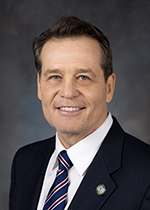
Senate committee · Health & Human Services · Final status: Died in committee
Subjects
Disabilities, Persons with
Education--Higher--Institutions & Programs
Governor
Health--General
Human Services--Medical Assistance
Mental Health & Substance Abuse
State Agencies, Boards & Commissions--Newly Proposed
DISABILITY POLICY, TASK FORCE ON (VY8MR)
HOUSE OF REPRESENTATIVES
SENATE, TEXAS
Text
The text as introduced · 1,804 words
89R15741 EAS-F

By: Perry
S.B. No. 2397

A BILL TO BE ENTITLED

AN ACT

relating to the establishment of the task force on disability

policy.

BE IT ENACTED BY THE LEGISLATURE OF THE STATE OF TEXAS:

SECTION 1. Subtitle I, Title 4, Government Code, is amended

by adding Chapter 550A to read as follows:

CHAPTER 550A. TASK FORCE ON DISABILITY POLICY

Sec. 550A.0001. DEFINITION. In this chapter, "task force"

means the task force on disability policy established under Section

550A.0002.

Sec. 550A.0002. ESTABLISHMENT; PURPOSE. The task force on

disability policy is established to:

(1) develop a comprehensive 10-year plan for this

state's disability policy; and

(2) provide strategic recommendations for state

policies to emphasize innovation, efficiency, and dignity for

individuals with a disability who reside in this state.

Sec. 550A.0003. COMPOSITION. (a) The task force is

composed of:

(1) at least 17 voting members appointed by the

governor as follows:

(A) two members of the senate;

(B) two members of the house of representatives;

(C) at least two members who are or are related to

someone who has a lived experience with:

(i) medical fragility or chronic complex

medical needs;

(ii) autism;

(iii) mental health issues;

(iv) intellectual and developmental

disabilities;

(v) transitional care services; or

(vi) physical disabilities;

(D) four members who are health care

professionals;

(E) two members who represent relevant advocacy

organizations;

(F) two members who represent institutions of

higher education in this state; and

(G) three members who are policy experts

specializing in health care, Medicaid services, special education,

mental health care, or disability services;

(2) at least one nonvoting member appointed by the

governor who is a representative of a local mental health authority

or a local intellectual and developmental disability authority, as

those terms are defined by Section 531.002, Health and Safety Code;

and

(3) additional nonvoting members as the task force

considers necessary who represent:

(A) relevant state agencies, appointed by the

executive head of each agency; and

(B) other interested persons or subject matter

experts.

(b) The governor shall consult with the lieutenant governor

and the speaker of the house of representatives in appointing task

force members to ensure bipartisan representation, engagement of

residents of this state, and diverse expertise on the task force.

Sec. 550A.0004. PRESIDING OFFICER. The governor shall

designate a member of the task force to serve as presiding officer

of the task force.

Sec. 550A.0005. VACANCY. A vacancy on the task force shall

be filled in the same manner as the original appointment.

Sec. 550A.0006. MEETINGS. (a) The task force shall meet at

least once each quarter at the call of the presiding officer.

(b) The task force shall provide opportunities for members

of the public to participate in at least three meetings held at a

variety of locations in this state each calendar year.

Sec. 550A.0007. SUBCOMMITTEES ON SPECIFIC ISSUES; REPORTS.

(a) The task force shall establish subcommittees to address

specific issues impacting individuals with a disability,

including:

(1) health care;

(2) education;

(3) early childhood care;

(4) transitional care;

(5) crisis prevention and intervention;

(6) juvenile justice;

(7) mental health care;

(8) long-term community-based services and supports;

and

(9) alternative funding sources and service delivery

models for the issues described by Subdivisions (1)-(8).

(b) Each subcommittee must include:

(1) at least two task force members to serve as chair

and vice-chair of the subcommittee; and

(2) subject matter experts in fields relevant to the

subcommittee to provide specialized knowledge and guidance.

(c) Consistent with its purpose, each subcommittee shall:

(1) consult with relevant subject matter experts,

advocacy organizations, state agency personnel, and parents or

consumers who have used relevant services;

(2) report the subcommittee's determinations and

recommendations at a task force meeting at least once each year; and

(3) biennially provide a written report with

recommendations for integration into the task force report required

under Section 550A.0010 not later than the 60th day before the date

the report is scheduled for release.

Sec. 550A.0008. TASK FORCE PLAN. (a) The task force shall

develop a plan for this state to address for each issue described in

Section 550A.0007:

(1) this state's policies, services, programs, and

funding mechanisms;

(2) redundancies in, allocations of, and uses of state

resources;

(3) best practices in, trends of, and minimum

standards of care;

(4) service delivery disparities, service provision

entry points, and service provision obstacles;

(5) recommendations for policy integration among

state agencies and innovative solutions to improve care and foster

independence for residents who are provided care; and

(6) development of cost-effective, family-focused

state policies that prioritize dignity, autonomy, and unified

families and improve the care, quality, and efficiency of the

provided care and services.

(b) In developing the plan under Subsection (a), the task

force shall evaluate:

(1) outdated, redundant, ineffective, and fragmented

state agency policies;

(2) current and future state agency policies regarding

service provision and the planning and funding necessary to

implement those policies;

(3) incentives for family-focused, quality outcome

measures for provision of care and services;

(4) long-term or alternative funding sources and

sustainable care models;

(5) long-term cost-effectiveness and a cost-benefit

analysis of appropriate access to home and community-based services

and other critical programs and services to unite families and

provide care and services to individuals with a disability in the

individuals' communities; and

(6) possible alternative service delivery options.

(c) In developing the plan under Subsection (a), the task

force shall:

(1) identify the individual or state agency

responsible for implementing each task specified in the plan and

set a time for implementing each recommendation;

(2) establish benchmarks to measure the progress

toward goals and objectives specified in the plan;

(3) consult with the Legislative Budget Board to

coordinate relevant cost studies and account for long-term savings

of short-term investments for the issues specified in the plan;

(4) consult with personnel from other states to

identify best practices related to the specified issues;

(5) consult with the state demographer and relevant

federal agencies to account for future demographic trends in

addressing the specified issues;

(6) coordinate with federal and state agencies to

compile a list of opportunities to increase flexible funding for

services provided to individuals with a disability, including

alternative funding sources and service delivery options;

(7) consult with pediatric specialists and other

health care professionals to determine best medical practices for

care provided to individuals with a disability;

(8) coordinate with mental health, education, and

disability advocates;

(9) consider comments of interested persons,

including testimony from parents in each health and human services

region;

(10) consider current barriers that prevent this state

from accomplishing each recommendation described by Section

550A.0010;

(11) consider additional resource needs;

(12) consider resource redirection for more efficient

and effective service provision;

(13) propose recommendations for legislative or other

action; and

(14) compose feasibility statements on related

recommendations.

Sec. 550A.0009. COLLABORATION WITH INSTITUTION OF HIGHER

EDUCATION. To assist with developing the plan under Section

550A.0008 and to leverage data-focused approaches and research in

informing task force recommendations, the task force shall

collaborate with:

(1) at least one institution of higher education in

this state engaged in research relevant to the task force's duties

described by Section 550A.0008; and

(2) health-related institutions of higher education

in this state.

Sec. 550A.0010. RECOMMENDATIONS AND REPORTS. (a) The plan

created under Section 550A.0008 must provide recommendations for

the provision of disability services to:

(1) maximize the use of federal funds available to

this state for the duties described by Section 550A.0008;

(2) reduce the number of families who experience

crisis due to insufficient and ineffective interventions or

services or lack of coordination and planning of interventions or

services;

(3) improve families' ability to navigate this state's

system of services through improved coordination between service

providers and increased outreach;

(4) remove barriers to local coordination of services

and supports;

(5) improve outcomes and family supports;

(6) improve early detection and intervention

services;

(7) increase the number of community-based options for

individuals with disabilities;

(8) improve accountability for each state agency

represented on the task force and other service providers;

(9) reduce existing fragmentation of service delivery

to reflect best practices and eliminate ineffective interventions;

(10) evaluate the feasibility of a third-party care

coordinator for a legally authorized representative program to

provide support services for individuals with disabilities;

(11) reduce service disparities and redundancies;

(12) improve data management;

(13) prevent unnecessary parental relinquishment of

custody;

(14) create a core set of quality measures to

determine quality of care and improvements to quality of life; and

(15) improve availability of superior community-based

acute and long-term care services and supports.

(b) Not later than September 1, 2026, the task force shall

submit a preliminary report to the governor, lieutenant governor,

speaker of the house of representatives, and appropriate standing

committees of each house of the legislature. The preliminary

report must outline initial determinations, recommendations, and

priority areas for action and provide a plan for future

legislation, policy changes, and implementation. The preliminary

report must be published on the Internet website of each state

agency represented on the task force.

(c) Not later than September 1, 2028, the task force shall

submit a final report, including a comprehensive disability policy

plan and strategic recommendations to the governor, lieutenant

governor, speaker of the house of representatives, and appropriate

standing committees of each house of the legislature. The final

report must include:

(1) a review and analysis of current state agency

programs, policies, procedures, and resource allocations related

to the issues studied by the task force;

(2) identification of service delivery disparities,

entry points to the state's system for service provision, and

service obstacles;

(3) recommendations for innovative, cost-effective

state policies and priority action areas;

(4) strategies to incentivize family-focused quality

outcomes;

(5) metrics for evaluating state policy

implementation and effectiveness;

(6) a review of alternative funding sources and

service delivery models for the state's system; and

(7) a plan and proposed time for state policy changes

and implementation.

Sec. 550A.0011. FUNDING. The task force may accept gifts,

grants, and donations to accomplish the purposes of the task force.

Sec. 550A.0012. EXPIRATION. This chapter expires and the

task force is abolished September 1, 2028.

SECTION 2. (a) As soon as practicable after the effective

date of this Act, the appointing authorities shall appoint the

members of the task force on disability policy established by

Section 550A.0002, Government Code, as added by this Act.

(b) Not later than September 30, 2025, the task force on

disability policy established by Section 550A.0002, Government

Code, as added by this Act, shall hold its initial meeting.

(c) Not later than September 1, 2028, the task force on

disability policy shall submit the plan required under Section

550A.0008, Government Code, as added by this Act, and the final

report required under Section 550A.0010, Government Code, as added

by this Act.

SECTION 3. This Act takes effect September 1, 2025.