Monitoring the Session

SB 513

Rural Foster Care Pilot Runs Only If It’s ‘Sufficiently Funded’

Became law, effective Sep 1, 2025

Verdict: Smells

SmellsInitial review
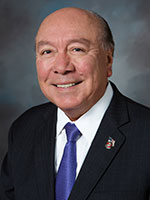
Sen. Kevin SparksRSenate 31
Both charges, and why
The hole

THE TEXT

“The department shall implement the pilot program only if the pilot program is sufficiently funded.”

Bill text, House committee report version (H)

The duty to actually run the pilot depends on funding the bill does not provide. Without money, the main result could be a model and a report rather than services on the ground.

The hole
New fee, fund, board or appointees

THE TEXT

“The department and lead entity shall establish a community alliance or similar group of stakeholders”…

Bill text, House committee report version (H)

The bill creates a new stakeholder body with planning and governance duties for the pilot. The caption does not promise less government, so this is a mild instance.

New fee, fund, board or appointees

Initial review · graded Oct 22, 2026 · Headline, summary and grade are analysis of the bill text, not a finding about any person · How we grade

Caption

relating to a rural community-based care pilot program.

Caption from analyzed text · version H.

Summary

No money in the bill. A model and a report are due January 1, 2027.

The bill tells the state foster care agency to build a pilot program that hands child welfare services in one rural region to a local nonprofit or local government. It covers rural regions, mostly counties of 50,000 people or less, where the agency asked for bidders to run community-based care and got none, along with the families and children served there. The agency must develop the model and report to the Legislature by January 1, 2027, but it runs the program only if it is sufficiently funded, and the program ends September 1, 2031.

Receipt

The receipt

89R-SB513 · 2024-11-26

SOLD BY

+ 3 coauthors

ITEM

relating to a rural community-based care pilot program.

WHAT IT DOES

No money in the bill. A model and a report are due January 1, 2027.

The bill tells the state foster care agency to build a pilot program that hands child welfare services in one rural region to a local nonprofit or local government. It covers rural regions, mostly counties of 50,000 people or less, where the agency asked for bidders to run community-based care and got none, along with the families and children served there. The agency must develop the model and report to the Legislature by January 1, 2027, but it runs the program only if it is sufficiently funded, and the program ends September 1, 2031.

CHARGES

[x] THE HOLEanalysis confidence 45%

THE TEXT

“The department shall implement the pilot program only if the pilot program is sufficiently funded.”

Bill text, House committee report version (H)

The duty to actually run the pilot depends on funding the bill does not provide. Without money, the main result could be a model and a report rather than services on the ground.

[x] NEW FEE, FUND, BOARD OR APPOINTEESanalysis confidence 35%

THE TEXT

“The department and lead entity shall establish a community alliance or similar group of stakeholders”…

Bill text, House committee report version (H)

The bill creates a new stakeholder body with planning and governance duties for the pilot. The caption does not promise less government, so this is a mild instance.

TOTAL

Net to General Revenue · FY 2026($2,056,348)

LBB estimate, flow · fiscal note version S · ( ) = negative · source

Sources

Fiscal note · version S · March 20, 2025

Estimated Two-year Net Impact to General Revenue Related Funds for SB513, Committee Report 1st House, Substituted: a negative impact of ($4,143,056) through the biennium ending August 31, 2027. This analysis cannot determine the cost related to the implementation of the pilot program due to the timing of the report and the uncertainty of the costs that could be identified in the third-party evaluation.

First year · FY 2026 · ($2,056,348)

Probable Net Positive/(Negative) Impact to General Revenue Related Funds

LBB published estimates · flow over the stated periods.

Source snapshot 2026-10-19, Central time.

HISTORY

  1. Received by the Secretary of the Senate
  2. Filed
  3. Co-author authorized
  4. Read first time
  5. Referred to Health & Human Services
  6. Co-author authorized
  7. Scheduled for public hearing on . . .
  8. Considered in public hearing
  9. Testimony taken in committee
  10. Left pending in committee
  11. Considered in public hearing
  12. Vote taken in committee
  13. Reported favorably as substituted
  14. Committee report printed and distributed
  15. Placed on intent calendar
  16. Co-author authorized
  17. Rules suspended-Regular order of business
  18. Read 2nd time & passed to engrossment
  19. Vote recorded in Journal
  20. Three day rule suspended
  21. Record vote
  22. Read 3rd time
  23. Passed
  24. Record vote
  25. Reported engrossed
  26. Received from the Senate
  27. Read first time
  28. Referred to Human Services
  29. Considered in formal meeting
  30. Reported favorably w/o amendment(s)
  31. Comte report filed with Committee Coordinator
  32. Committee report distributed
  33. Committee report sent to Calendars
  34. Laid out in lieu of companion HB 1536
  35. Read 2nd time
  36. Passed to 3rd reading
  37. Record vote RV#630
  38. Statement(s) of vote recorded in Journal
  39. Read 3rd time
  40. Passed
  41. Record vote RV#787
  42. Statement(s) of vote recorded in Journal
  43. House passage reported
  44. Reported enrolled
  45. Signed in the Senate
  46. Signed in the House
  47. Sent to the Governor
  48. Signed by the Governor
  49. Effective on 9/1/25
FILED UNDER

TAXPAYER-FUNDED NGOS

THE TEXT

“a nonprofit entity that has a board of directors composed entirely of residents of the catchment area”

Bill text, House committee report version (H)

The pilot routes state and federal child welfare money and case management through a contracted nonprofit or local government lead entity instead of the agency itself.

GOVERNMENT GROWTH UNDER A CONSERVATIVE BANNER

THE TEXT

“The department shall contract with an independent evaluator”…

Bill text, House committee report version (H)

The bill requires the agency to sign an outside evaluation contract for the pilot.

SIGNED FOR BY

House · 145 yea · 1 nay

Senate · 31 yea · 0 nay

Sources

House: Final passage · Apr 29, 2025. Journal. Published stock for this vote. Snapshot 2026-10-19, Central time.

Senate: Final passage · Mar 26, 2025. Journal. Published stock for this vote. Snapshot 2026-10-19, Central time.

All floor motions and other positions below.

Smells

THANK YOU FOR CHECKING THE RECEIPT

CAMPAIGN PAID FOR BY

CAMPAIGN PAID FOR BY

Donors

Texans for Lawsuit Reform PAC$60KKyle & Jamie Stallings$25,000Tim Dunn$25,000

Not tied to this bill.

Sources

The author's campaign account only. Own money and internal transfers are separate on the member page.

Derived itemized flow · Jul 25, 2024 to Oct 23, 2026. State data as of Nov 4, 2026.

Derived itemized contributions on live regular reports and uncovered special-session dates. Internal account transfers and daily reports are excluded.

Texans for Lawsuit Reform PAC$60,000.00

Texans for Lawsuit Reform PAC

$60,000.00

Cash
$60,000.00
Paid by others
$0.00
Total
$60,000.00

Also funds 124 other sitting lawmakers.

Derived recipient stock · Jul 10, 2024 to Oct 23, 2026. State data as of Nov 4, 2026.

TEC account match.

Team
Sources

Derived itemized flow · Oct 15, 2024 to Oct 23, 2026. State data as of Nov 4, 2026.

Derived itemized contributions on live regular reports and uncovered special-session dates. Internal account transfers and daily reports are excluded.

Report IDs: 101012623, 101029380, 101072732.

Kyle & Jamie Stallings$25,000.00
Tim Dunn$25,000.00
Money

Missing data does not establish zero giving. Display amounts are rounded.

×

Texans for Lawsuit Reform PAC

$60,000.00

Cash
$60,000.00
Paid by others
$0.00
Total
$60,000.00

Also funds 124 other sitting lawmakers.

Derived recipient stock · Jul 10, 2024 to Oct 23, 2026. State data as of Nov 4, 2026.

TEC account match.

Team
Sources

Derived itemized flow · Oct 15, 2024 to Oct 23, 2026. State data as of Nov 4, 2026.

Derived itemized contributions on live regular reports and uncovered special-session dates. Internal account transfers and daily reports are excluded.

Report IDs: 101012623, 101029380, 101072732.

Votes5

House Apr 29, 2025

Yea
145
Nay
1
Present, not voting
2
Absent
1
Excused
1
Names

Named positions matched to lawmakers. See the journal for unmatched names.

House journal

Sources

Record 787

SB 513 was passed by (Record 787): 145 Yeas, 1 Nays, 2 Present, not voting.

Published stock of positions for this vote, except where marked derived.

  • Yea: 145 (published)
  • Nay: 1 (published)
  • Present, not voting: 2 (published)
  • Absent: 1 (derived from named list)
  • Excused: 1 (derived from named list)

House journal. Source snapshot 2026-10-19, Central time.

House Apr 28, 2025

Yea
145
Nay
1
Present, not voting
2
Absent
1
Excused
1
Names

Named positions matched to lawmakers. See the journal for unmatched names.

House journal

Sources

Record 630

SB 513 was passed to third reading by (Record 630): 145 Yeas, 1 Nays, 2 Present, not voting.

Published stock of positions for this vote, except where marked derived.

  • Yea: 145 (published)
  • Nay: 1 (published)
  • Present, not voting: 2 (published)
  • Absent: 1 (derived from named list)
  • Excused: 1 (derived from named list)

House journal. Source snapshot 2026-10-19, Central time.

Senate Mar 26, 2025

Yea
31
Nay
0
Present, not voting
Not printed
Absent
Not printed
Excused
Not printed
Names

Senate journal

Names were not printed. No individual positions are inferred.

Sources

Senator Sparks moved that Senate Rule 7.18 and the Constitutional Rule requiring bills to be read on three several days be suspended and that CSSB 513 be placed on its third reading and final passage. The motion prevailed by the following vote: Yeas 31, Nays 0. The bill was read third time and was passed by the following vote: Yeas 31, Nays 0.

Published stock of positions for this vote, except where marked derived.

  • Yea: 31 (published)
  • Nay: 0 (published)
  • Present, not voting: Not printed
  • Absent: Not printed
  • Excused: Not printed

Senate journal. Source snapshot 2026-10-19, Central time.

Senate Mar 26, 2025

Yea
31
Nay
0
Present, not voting
Not printed
Absent
Not printed
Excused
Not printed
Names

Senate journal

Names were not printed. No individual positions are inferred.

Sources

Senator Sparks moved that Senate Rule 7.18 and the Constitutional Rule requiring bills to be read on three several days be suspended and that CSSB 513 be placed on its third reading and final passage. The motion prevailed by the following vote: Yeas 31, Nays 0.

Published stock of positions for this vote, except where marked derived.

  • Yea: 31 (published)
  • Nay: 0 (published)
  • Present, not voting: Not printed
  • Absent: Not printed
  • Excused: Not printed

Senate journal. Source snapshot 2026-10-19, Central time.

Senate Mar 26, 2025

Yea
Not printed
Nay
Not printed
Present, not voting
Not printed
Absent
Not printed
Excused
Not printed
Names

Senate journal

Names were not printed. No individual positions are inferred.

Voice vote. No numeric tally or individual yeas are inferred.

Sources

The bill was read second time and was passed to engrossment by a viva voce vote.

Published stock of positions for this vote, except where marked derived.

  • Yea: Not printed
  • Nay: Not printed
  • Present, not voting: Not printed
  • Absent: Not printed
  • Excused: Not printed

Senate journal. Source snapshot 2026-10-19, Central time.

Witnesses23
For
22
Against
0
On
1
Names

For

  • AARP Texas1 registration
  • Every Texan1 registration
  • National Association of Social Workers - Texas1 registration
  • Open Homes Initiative1 registration
  • Self6 registrations
  • Self; Buckner International1 registration
  • Self; New Horizons Ranch and Center, Inc1 registration
  • Self; One Accord for Kids1 registration
  • Self; Texas Association of Family Defense Attorneys1 registration
  • Self; Texas Right To Know1 registration
  • Self; West Texas Counseling and Guidance1 registration
  • Self; West Texas Together1 registration
  • Texans Care for Children1 registration
  • Texas CASA1 registration
  • Texas Public Policy Foundation1 registration
  • TexProtects1 registration
  • The Texas Catholic Conference of Bishops1 registration

On

  • Department of Family and Protective Services1 registration
Sources

23 parsed registrations across the loaded witness lists.

Derived stock of witness registrations. Repeated appearances count separately. Organizations and self-representation appear as printed.

Senate witness list. Source snapshot 2026-10-20, Central time.

Fiscal
Net to General Revenue · FY 2026($2,056,348)

LBB estimate, flow · fiscal note version S · ( ) = negative · source

Sources

Fiscal note · version S · March 20, 2025

Estimated Two-year Net Impact to General Revenue Related Funds for SB513, Committee Report 1st House, Substituted: a negative impact of ($4,143,056) through the biennium ending August 31, 2027. This analysis cannot determine the cost related to the implementation of the pilot program due to the timing of the report and the uncertainty of the costs that could be identified in the third-party evaluation.

First year · FY 2026 · ($2,056,348)

Probable Net Positive/(Negative) Impact to General Revenue Related Funds

LBB published estimates · flow over the stated periods.

Source snapshot 2026-10-19, Central time.

How this was graded

Analysis of text version H by claude-opus-5-5, Oct 22, 2026, against the published rubric.

Sources

Texas Senate · Filed Nov 26, 2024

05/13/2025 E Effective on 9/1/25

Texas Legislature Online · Introduced · Senate Committee Report · Engrossed · House Committee Report · Enrolled

Data snapshot Oct 26, 2026 at 4:19 AM CDT. Grades, charges, quotes and corrections follow the published record.

Coauthors
Sponsors

House committee · Human Services · Committee vote 10 aye, 0 nay, 1 absent · Out of committee

Senate committee · Health & Human Services · Committee vote 8 aye, 0 nay, 1 absent · Out of committee

Companion

HB 1536 by Craddick (identical)

Subjects

Electronic Information Systems

Family--Child Protection

Human Services--Child Services

Labor--Workforce Development--Rural

Minors--Health & Safety

State Finances--Management & Control

ADOPTION

FOSTER CARE

RURAL

FAMILY & PROTECTIVE SERVICES, DEPARTMENT OF

Text

The text as introduced · 1,977 words

89R7262 AMF-F

By: Sparks
S.B. No. 513

A BILL TO BE ENTITLED

AN ACT

relating to a rural community-based care pilot program.

BE IT ENACTED BY THE LEGISLATURE OF THE STATE OF TEXAS:

SECTION 1. Chapter 264, Family Code, is amended by adding

Subchapter B-2 to read as follows:

SUBCHAPTER B-2. RURAL COMMUNITY-BASED CARE PILOT PROGRAM

Sec. 264.181. DEFINITIONS. In this subchapter:

(1) "Catchment area" has the meaning assigned by

Section 264.152.

(2) "Community-based care" has the meaning assigned by

Section 264.152.

(3) "Eligible rural region" means a catchment area for

which the department requested but did not receive bids, proposals,

or other applicable expressions of interest to implement

community-based care under Subchapter B-1 in which at least

two-thirds of the counties comprising the area have a population of

50,000 or less.

(4) "Pilot program" means a rural community-based care

pilot program established under this subchapter.

Sec. 264.182. ESTABLISHMENT OF PILOT PROGRAM. The

department shall establish a rural community-based care pilot

program in an eligible rural region to:

(1) implement a community-based model of child welfare

services and increase community engagement in the child welfare

system;

(2) improve outcomes for children and families by

expanding the availability of child welfare services and promoting

innovation in the delivery of child welfare services to children

and families; and

(3) develop a sustainable, replicable model for the

provision of child welfare services in rural areas.

Sec. 264.183. QUALIFICATIONS OF LEAD ENTITY; SELECTION. (a)

To enter into a contract with the department to serve as a lead

entity to provide services under this subchapter, an entity must

be:

(1) a nonprofit entity that has a board of directors

composed entirely of residents of the catchment area; or

(2) a local government entity.

(b) In selecting a lead entity, the department shall

consider whether a prospective contractor has:

(1) strong community support and partnerships;

(2) demonstrated experience leading collaborative

initiatives in the region; and

(3) the capacity to coordinate with local community

organizations to serve children and families.

(c) The department shall request local stakeholders in an

eligible rural region to provide any necessary information about

the region that will assist the department in:

(1) preparing the department's request for bids,

proposals, or other applicable expressions of interest to provide

community-based care in the eligible rural region; and

(2) selecting a lead entity to provide community-based

care in the eligible rural region.

Sec. 264.184. PROGRAM MODEL AND IMPLEMENTATION SCHEDULE;

AUTHORITY. (a) The lead entity shall develop a program model that

includes a timeline for implementing community-based care in the

eligible rural region and that:

(1) includes the following services for families and

children:

(A) early intervention services to prevent entry

into foster care;

(B) family preservation services, as defined by

Section 262.401;

(C) case management, as defined by Section

264.152;

(D) foster care and kinship care services;

(E) adoption and post-adoption services;

(F) transition services for youth aging out of

foster care; and

(G) any additional services necessary to meet the

needs of children and families in the region;

(2) develops and coordinates with a diverse network of

service providers, including faith-based organizations, local

mental health authorities, and others to ensure comprehensive

service delivery;

(3) develops and implements innovative approaches to

improve outcomes for children and families;

(4) addresses any inequities in the region's child

welfare system;

(5) establishes a quality assurance system; and

(6) establishes a system to manage financial

resources, including state and federal funds.

(b) To implement the program model developed under

Subsection (a), a lead entity may:

(1) develop and implement policies and procedures

regarding the provision of community-based care within the scope of

applicable law;

(2) allocate resources as needed to meet community

needs; and

(3) enter into contracts with service providers.

Sec. 264.185. COLLABORATIVE GOVERNANCE STRUCTURE. (a) The

lead entity shall establish a collaborative governance structure to

provide oversight and guidance for the provision of community-based

care under the pilot program. The lead entity shall collaborate

with:

(1) the entity's leadership and staff;

(2) local families with lived experience in the child

welfare system;

(3) local representatives from sectors related to the

child welfare system, including the judiciary, education, and

health care; and

(4) any other community stakeholders.

(b) The lead entity shall collaborate with the entities

described by Subsection (a) to:

(1) develop program policies and procedures;

(2) identify community needs and resources;

(3) monitor program performance and outcomes; and

(4) make recommendations for continuous program

improvement.

(c) The department may only provide advice to the lead

agency in the implementation of the pilot program.

Sec. 264.186. FUNDING AND RESOURCES. (a) The department

shall work with the lead entity to develop a capitated funding model

and budget that:

(1) provides a fixed rate of funding per child

receiving services under the pilot program;

(2) accounts for the additional costs of providing

services to geographically dispersed populations in rural areas,

including:

(A) increased transportation costs;

(B) challenges in achieving economies of scale in

the provision of services;

(C) increased costs for recruiting and retaining

qualified staff in rural areas; and

(D) costs related to building and maintaining

service provider networks in rural areas;

(3) includes financial risk-sharing mechanisms;

(4) incentivizes desired outcomes and cost savings;

(5) supports innovation;

(6) allows for the reinvestment of cost savings into

the program; and

(7) allows the lead agency to flexibly allocate funds

within the scope of applicable law.

(b) The department shall explore and leverage various

funding sources, including state and federal funds, to implement

and sustain the pilot program.

(c) The department may provide the lead entity with

resources, including funds and personnel, to implement the pilot

program.

Sec. 264.187. INTEGRATED ELECTRONIC MANAGEMENT SYSTEM. (a)

The department and the lead entity shall implement an integrated

electronic management system for community-based care provided

under the pilot program that:

(1) allows for real-time case management;

(2) facilitates coordination among service providers;

and

(3) supports outcome tracking and reporting.

(b) The department shall provide to the lead entity

technical support and access to data as necessary to facilitate

effective implementation of the integrated electronic management

system.

(c) The department and lead entity shall establish

protocols related to the integrated electronic management system to

ensure:

(1) privacy and security of data; and

(2) the efficient sharing of information.

Sec. 264.188. WORKFORCE DEVELOPMENT. To support the

implementation of the pilot program, the lead entity, in

collaboration with the department and local educational

institutions, shall develop and implement a workforce development

plan that includes:

(1) strategies that address rural workforce

challenges, including strategies for recruiting and retaining

child welfare professionals;

(2) training programs aligned with best practices in

child welfare; and

(3) career advancement opportunities.

Sec. 264.189. INDEPENDENT EVALUATION. (a) The department

shall contract with an independent evaluator with expertise in

child welfare and the delivery of child welfare services in rural

areas to conduct a comprehensive evaluation of the pilot program.

The department shall consult with the lead entity and the entities

described by Section 264.185(a) when selecting the independent

evaluator.

(b) The independent evaluator shall assess:

(1) the outcomes for children and families receiving

services under the program;

(2) the cost-effectiveness of the program;

(3) the effectiveness of the community-based care

approach to providing child welfare services in rural areas;

(4) community engagement and satisfaction with the

program;

(5) program implementation fidelity; and

(6) any systemic changes made in provision of child

welfare services in the region under the program.

(c) The department and the lead agency shall cooperate with

the evaluation process and provide the independent evaluator all

necessary data and information to conduct the evaluation required

by this section.

(d) The department, lead agency, and entities described by

Section 264.185(a) shall review the independent evaluator's

findings under Subsection (b) and develop an action plan to address

any areas for improvement identified by the independent evaluator.

Sec. 264.190. WAIVERS. (a) The lead entity may apply to

the commissioner of the department for a waiver from any statutory

or regulatory requirement that governs the provision of child

welfare services.

(b) The waiver request must include an explanation of why

the waiver is necessary to provide the entity with flexibility or

implement innovations in the provision of community-based care

under the pilot program.

(c) The commissioner of the department shall grant a waiver

request under this section if the commissioner determines that:

(1) the waiver:

(A) will not jeopardize the health, safety, or

well-being of children and families receiving services under the

program; and

(B) is likely to improve outcomes for children

and families receiving services under the program; and

(2) the lead entity has a:

(A) clear plan for implementing the change that

requires the waiver; and

(B) method for evaluating the effectiveness of

the change being implemented under the waiver.

(d) Not later than the 30th day after the date the

commissioner of the department receives a waiver request, the

commissioner shall make a determination on the waiver request. If

the commissioner denies a waiver request, the commissioner shall

provide to the lead entity a written explanation of the reason for

the denial.

Sec. 264.191. CONFLICT RESOLUTION PROCESS. (a) The

department and lead entity shall establish a formal process for

resolving conflicts or disputes that arise during the

implementation of the pilot program. The process must prioritize

collaborative problem solving and may include mediation if

necessary.

(b) If a conflict or dispute cannot be resolved through the

process described by Subsection (a), the department or the lead

entity may request a review by an independent panel of residents of

the catchment area appointed by the governor.

Sec. 264.192. CHANGE ORDER PROCESS. (a) Except as provided

by this section, the department may not change any requirement or

responsibility or the scope of work of the lead agency.

(b) The department may request a change in writing by

providing the lead agency with:

(1) a detailed explanation of the proposed change and

reasons for the proposed change; and

(2) a comprehensive cost analysis for implementing the

proposed change that includes:

(A) the source of funding for the proposed

change; or

(B) if funding sufficient to implement the change

is not available, an explanation of how existing requirements will

be modified for the cost of the proposed change to fit into the

existing budget.

(c) A change request under this section is subject to

negotiation between the lead entity and the department. The lead

entity may reject any proposed change that is not adequately funded

or substantially alters the provision of community-based care under

the contract executed between the department and the entity. In the

event of a dispute between the department and the entity regarding a

proposed change or the funding for the change, the department and

lead entity shall follow the conflict resolution process described

by Section 264.191.

(d) An agreed-upon change order must be documented in a

written amendment to the contract between the department and the

entity and executed by both parties.

Sec. 264.193. ANNUAL REPORT. The department shall submit

an annual report to the legislature that includes:

(1) the findings of the independent evaluator under

Section 264.189, including any recommendations from the

independent evaluator for improving and expanding the pilot

program;

(2) information about each denied waiver under Section

264.190, including the reason for denial; and

(3) a detailed account of each agreed-upon change

order under Section 264.192 that includes an explanation of:

(A) the change and the reason for the change; and

(B) the cost of funding the change and how the

cost was addressed.

Sec. 264.194. RULEMAKING. The department may adopt rules

necessary to implement this subchapter.

Sec. 264.195. PROGRAM REVIEW; EXPIRATION. (a) Not later

than January 1, 2029, the legislature shall review the outcomes and

effectiveness of the pilot program to determine whether to extend,

modify, or conclude the program.

(b) This subchapter expires September 1, 2029.

SECTION 2. This Act takes effect September 1, 2025.